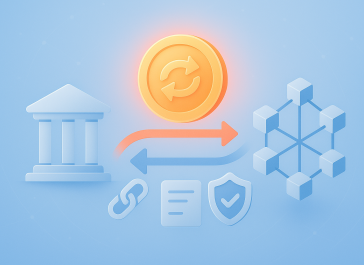
Blockchain & Cryptocurrency Glossary

Lorem ipsum dolor sit amet, consectetur adipiscing elit, sed do eiusmod tempor incididunt ut labore et dolore magna aliqua.

  • search-icon Clear Definitions
  • search-icon Practical
  • search-icon Technical
  • search-icon Related Terms

Tokenization

1 min read
Pronunciation
[toh-kuh-nuh-zey-shuhn]
Analogy
Tokenization is like converting a physical deed to a house into a digital certificate that can be easily divided, transferred, and tracked. While the house itself remains physical, the rights to own it become digital tokens that can be bought and sold in smaller portions, all with secure records of who owns what percentage.
Definition
The process of converting rights to an asset into a digital token on a blockchain. Tokenization transforms real-world assets (like real estate, art, or commodities) or rights (ownership, voting, access) into digital tokens that can be issued, traded, and managed on blockchain networks.
Key Points Intro
Tokenization bridges traditional assets with blockchain technology, enabling new forms of ownership and exchange.
Key Points

Enables fractional ownership of previously indivisible assets like real estate or artwork.

Creates liquidity for traditionally illiquid assets through easier trading.

Provides immutable records of ownership and provenance on the blockchain.

Reduces administrative costs associated with managing and transferring assets.

Example
A $10 million commercial building can be tokenized into 10,000 tokens worth $1,000 each, allowing small investors to own fractions of the property, receive proportional rental income, and trade their ownership stakes without traditional real estate transfer processes.
Technical Deep Dive
Tokenization typically implements one of several token standards depending on the asset characteristics: fungible token standards (like ERC-20) for identical, divisible assets such as security tokens representing company shares; non-fungible token standards (like ERC-721) for unique items like art or collectibles; or hybrid approaches (like ERC-1155) supporting both fungible and non-fungible properties. The process involves creating a legal framework connecting the token to the underlying asset, establishing a corporate structure to manage the asset (often through Special Purpose Vehicles), deploying smart contracts governing the token behavior, and implementing compliance mechanisms to enforce regulatory requirements like KYC/AML procedures, transfer restrictions, or investor accreditation. Advanced tokenization platforms incorporate oracle services to automatically distribute dividends or revenue shares and governance mechanisms allowing tokenholders to vote on management decisions.
Security Warning
Tokenized assets exist at the intersection of digital and physical worlds, creating unique security considerations. Even with perfect blockchain security, the connection between tokens and real-world assets relies on legal frameworks and custodians that may introduce vulnerabilities or jurisdictional risks not present in purely digital assets.
Caveat
While blockchain records provide technical transparency, the legal recognition of tokenized ownership varies widely by jurisdiction. The legal enforceability of rights represented by tokens remains untested in many contexts, potentially creating gaps between technical ownership on-chain and legally recognized ownership off-chain.

Tokenization - Related Articles

9 min read

Ondo Finance architecture diagram showing BUIDL custody flow to OUSG tokens with whitelisted transfers and Flux Finance integration

Ondo Finance has emerged as a market leader in the tokenized treasuries sector, managing billions in total value locked and pioneering the integration of traditional fixed-income assets with decentralized finance....

Read

Investing in Tokenized RWAs: A Guide to Opportunities, Risks, and Due Diligence

Disclaimer: This article is for educational purposes only and does not constitute financial advice. Always consult with qualified financial professionals before making investment decisions....

Read
15 min read

The Rulebook for RWAs: Unpacking Regulation, Compliance, and Legal Structures

⚠️ Legal DisclaimerThis article is for informational purposes only and does not constitute legal advice. Regulatory requirements vary by jurisdiction and change frequently....

Read
11 min read

BlackRock & Franklin Templeton Tokenized Funds — What Their Moves Mean for RWAs

When Franklin Templeton pioneered tokenized money market funds on public blockchains, it opened the door for institutional adoption....

Read
10 min read

JPMorgan Onyx vs. BNY Mellon: A Tale of Two Institutional Strategies

While public blockchains capture headlines with their volatility and innovation, financial giants JPMorgan and BNY Mellon are quietly building the future of institutional finance on private, permissioned networks....

Read
17 min read

Tokenizing Intellectual Property: Rights, Royalties & Enforcement

Tokenizing Intellectual Property (IP) offers creators powerful new ways to monetize their work—from fractionalizing music royalties to licensing digital art for specific uses....

Read